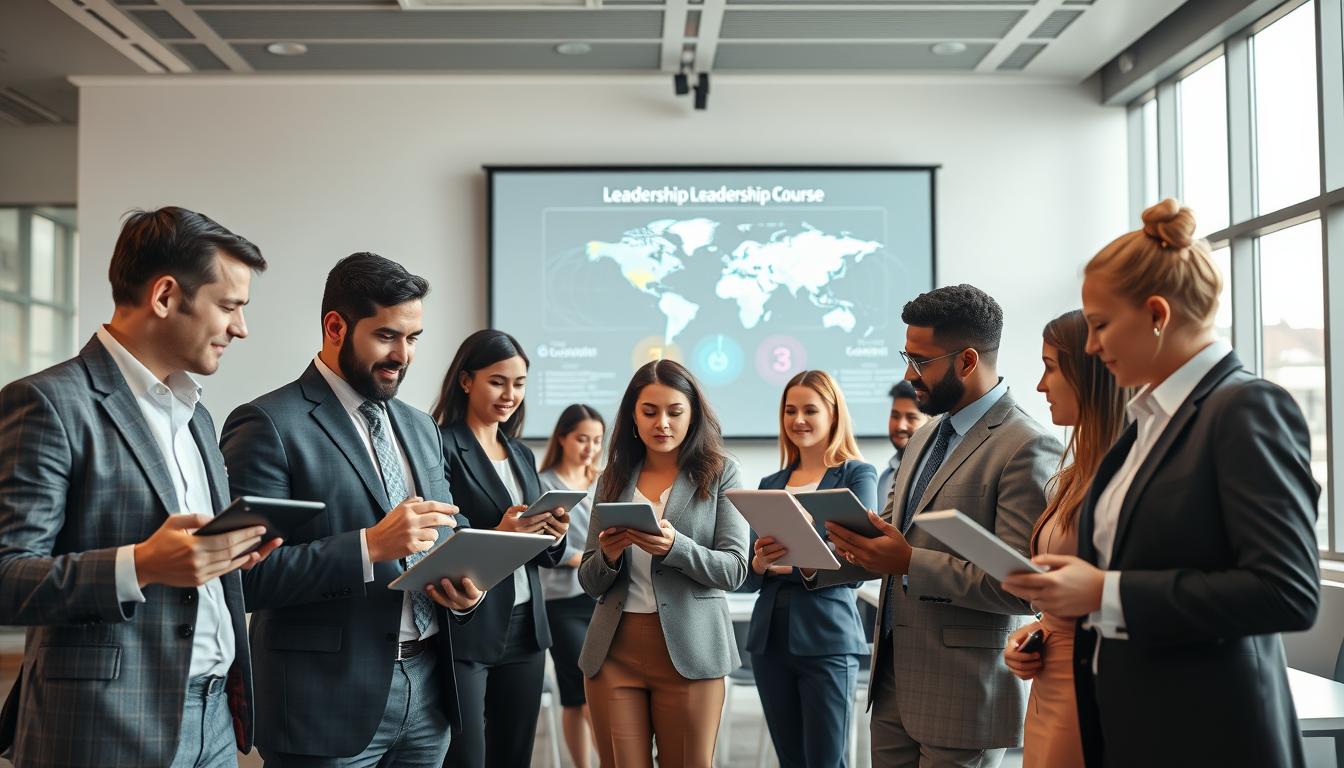
Can a short program change the way you work across borders? Many students wonder if a single course can build the real skills employers will need in the near future.
Unite! is an EU-funded project that links universities across Europe. By joining these initiatives, students access diverse resources and hands-on projects that bridge theory and practice.
These programs mix technology, discussion, and teamwork to help participants manage time and deliver results. They also stress diversity, gender equality, and cross-cultural communication in every section.
Whether work happens in a virtual classroom or a physical project, the end goal is clear: equip students with practical skills and a network for future careers in a changing world.
Understanding the Value of International Collaboration Courses Online
Working with peers from other countries helps students keep pace with fast-changing fields. This kind of shared study gives clear, practical benefits for future work.

A well-designed course updates professional knowledge and sharpens project management skills. It turns passive learning into active engagement and boosts real-world problem solving.
- Students connect with peers in different countries, gaining new perspectives and practical tools.
- These courses give access to specialized resources that many local programs lack.
- Active engagement means students contribute, lead tasks, and refine teamwork methods.
- Hands-on projects focus on application, helping students translate knowledge into solutions.
- Consistent group work supports professional development and stronger management habits.
In short, this model prepares students for global careers by blending current knowledge, real projects, and strong engagement.
Essential Skills Gained Through Global Learning
Hands-on projects in diverse settings teach students how to solve real problems at scale. This kind of learning mixes technical know-how with teamwork and clear communication. It builds a mix of practical and social abilities that employers seek.

Professional Skills
Students apply theoretical knowledge to realistic project scenarios. They refine time management, research methods, and technical problem solving. These experiences help students prepare for work in varied environments.
Social Competencies
Participants learn to bridge language differences and respect cultural and gender diversity. They adapt communication styles and give and receive feedback across peers from several universities and countries.
- Grow confidence to pursue global opportunities and team roles.
- Manage personal contributions while supporting group development.
- Build a solid foundation of field-specific knowledge and transferable skills.
| Skill Type | What Students Practice | Workplace Benefit |
|---|---|---|
| Technical | Applied research, tools, project delivery | Faster onboarding and stronger results |
| Interpersonal | Communication, adaptability, feedback | Better team trust and smoother projects |
| Leadership | Task coordination, decision-making | Ready for cross-border roles and responsibility |
Launching Your Experience with Virtual Kick-off Events
A focused launch event turns a group of strangers into a functioning team fast. A clear kickoff helps students set shared expectations and choose tools before deep work begins.
Well-structured kick-offs, whether virtual or a 3 to 5 days in-person start, set the tone for the whole course. They give participants the time to share learning goals and agree on communication channels.
Icebreaker Activities
Icebreakers are short, purposeful exercises that build trust and spark connection. Lecturers use them to make students comfortable sharing diverse backgrounds.
- Begin with quick introductions and a simple task that shows how tools will work.
- Use breakout rooms so small groups practice time management and decision steps.
- Facilitate a session where students list goals and resources they bring to the project.
Outcome: Students who join these activities engage more deeply, help the group develop, and ready themselves for effective project management.
Implementing Vibrant Learning Settings for Better Engagement
When instruction flips the schedule, students come prepared to dive into problem solving. That mindset shift makes class time active and focused on application.
Flipped Classroom
Flipped Classroom
Pre-class materials free live sessions for hands-on tasks. Lecturers use short videos and readings so students arrive ready to discuss a case.
This approach improves time management and cuts free-riding. Rotating groups ensure every student practices roles and gains peer feedback.
Problem Based Learning
Problem based learning asks participants to solve a realistic case together. Teams apply knowledge, test ideas, and refine their project plans through discussion.
It supports diversity and language skills by mixing perspectives and assigning clear responsibilities for fair contribution.
Virtual Labs
Virtual labs give practical access to tools and experiments that many campuses lack. They let students try methods, record results, and repeat steps on demand.
Lecturers can track progress, balance study and social time, and guide development toward workplace-ready skills.
| Setting | Main Benefit | How It Reduces Free-riding |
|---|---|---|
| Flipped Classroom | More active class sessions | Pre-work checks and role rotation |
| Problem Based Learning | Applied problem solving | Shared deliverables and peer assessment |
| Virtual Labs | Hands-on practice | Logged activity and targeted tasks |
Navigating Cultural Diversity in Group Projects
Group work that spans cultures asks students to tune into subtle differences in expectation and style.
Students must notice how culture and language shape deadlines, feedback, and meeting habits. Mixed groups that vary by gender, prior knowledge, and country help every member learn to adapt.
Clear communication is the foundation of success. Set shared rules for speaking time, decision steps, and how to give critique. This reduces misunderstandings and speeds project progress.
Lecturers who manage group make-up can avoid homogenous teams. Thoughtful mixing boosts creativity and supports student development for future work in diverse settings.
| Strategy | Student Benefit | Lecturer Action |
|---|---|---|
| Mixed groups | Broader perspectives and fair task load | Assign teams to ensure balance in gender and background |
| Communication norms | Fewer conflicts and clearer outcomes | Set rules for meetings and feedback |
| Early barrier checks | Faster trust and cohesion | Run short sessions that surface language or cultural gaps |
Outcome: When group composition and communication are managed, students deliver stronger projects and gain skills for working with varied cultures in their careers.
The Role of Lecturers in Supporting Student Success
Skilled instructors shape the environment so every student can contribute and grow. Lecturers act as coaches who guide learning, set clear goals, and keep the course on schedule.
Troubleshooting Cultural Barriers
A key task is spotting language gaps and cultural friction early. Tools like the Aalto University Teamwork First-Aid Kit give practical steps for mediating disputes and improving group trust.
- Use short check-ins to surface issues with language or expectations.
- Model clear discussion rules and rotate roles to balance contribution.
- Encourage side study groups and events so engagement extends beyond class time.
By managing study time and teaching methods, lecturers protect student well-being and boost project delivery. Active supervision helps students gain knowledge, refine teamwork skills, and reach course goals by the end of the term.
Academic Disciplines That Benefit from Global Collaboration
Disciplines that open to cross-border teamwork often see clearer links between study and practice. Fields like business, global health, and environmental science gain immediate value when students apply knowledge to varied populations.
Programs in education and linguistics also profit from exchanges with universities abroad. Students use technology to bridge language gaps and test methods across countries.
Many offerings include specialized training in cross-cultural project management. Fees for some options start at 900 USD, and short professional development sessions—such as the Nairobi program from 27/07/2026 to 31/07/2026—give focused, hands-on days for managers and students.
The approach favors lifelong learning. Whether through virtual seminars or site visits to cities like Nairobi or Dubai, students build skills, manage complex projects, and grow networks that support career development.
- Business and management: practice global project delivery and stakeholder skills.
- Global health and environmental science: apply research across diverse populations.
- Education and linguistics: test teaching methods and language programs with peers abroad.
Outcome: These programs turn classroom studies into practical experience and create lasting professional connections for students entering a global workforce.
Conclusion
These short programs give students a clear pathway from classroom tasks to real-world project roles. A well-framed course turns study into tangible work skills that employers value.
Collaborative learning builds lasting professional ties and opens new opportunities for career development. The skills gained help students lead, adapt, and solve complex problems in diverse settings.
At the end, participation strengthens both practical experience and peer networks. A single program can spark ongoing growth and support students as they shape their careers in a connected world.