Could a classroom in Illinois help you learn from peers across the world without boarding a plane?
Harper College offers a virtual exchange program that connects students in different regions to build subject expertise and global competence. This service uses asynchronous video so learners have time to reflect and share thoughtful information.
The program runs in the USA and beyond, letting people compare local perspectives and data in a teacher-monitored setting. Communication is kept safe and structured, so students can focus on meaningful interaction rather than logistics.
These programs let students gain experience with real cultural material while using familiar tools. Clear feedback, steady data flow, and careful design make this a practical way to learn about other cultures from home.
Understanding the Rise of Virtual Global Education
Students no longer need passports to work with peers around the world on real problems. The shift from travel to online collaboration has made international education part of everyday campus life.
The pandemic sped adoption of these programs and forced schools to try new tools. Now that layer of learning is more refined and permanent. Employers say this experience builds the collaboration and global competence they want.
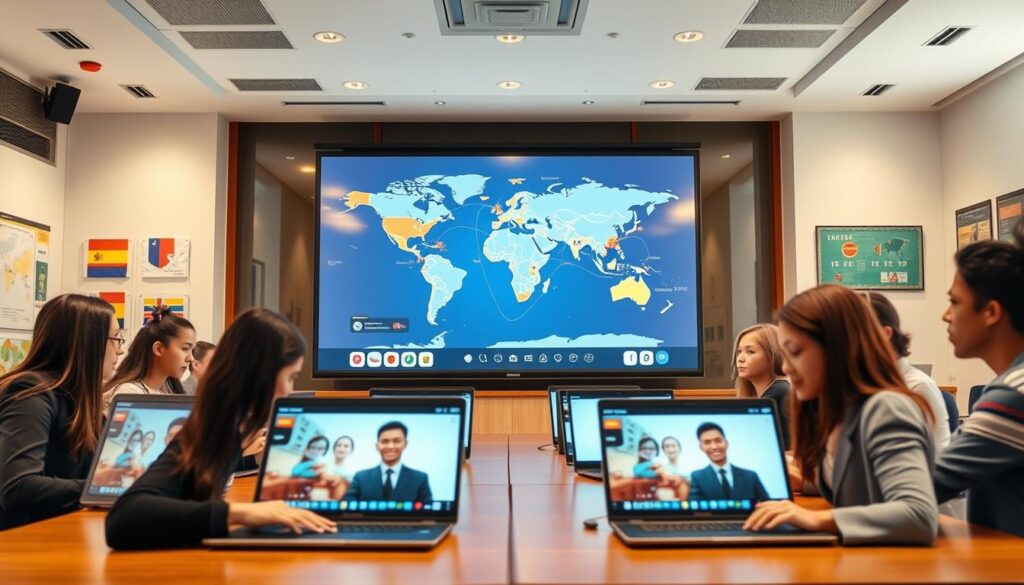
By removing travel costs, virtual exchange programs give people an opportunity to study with peers in other countries. Many students form friends and gain useful perspectives in less time than a semester abroad.
“These programs democratize access to international study and let educators use data to measure real impact.”
Educators track engagement with data and adjust the program to solve issues quickly. The result is broader participation and clear benefits for students, schools, and future employers.
Benefits of Digital Exchange Cultural Immersion Courses
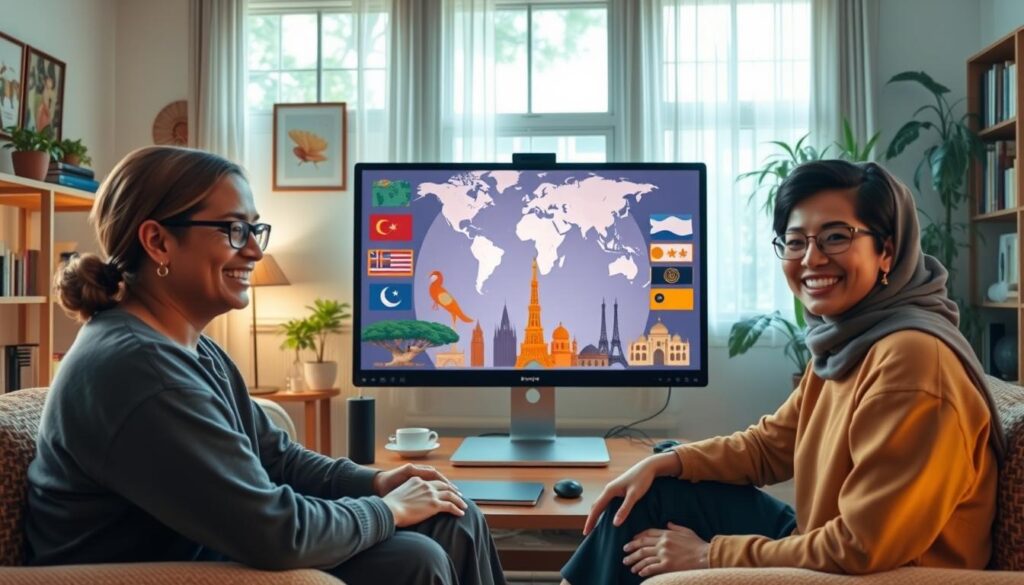
Remote peer projects give young people a chance to study others’ daily lives and build real skills. These programs open an opportunity for students from any high school to join conversations with peers in other countries.
Accessibility for All
Eligibility often requires at least one year of high school study. Low-cost or no-cost service options make global learning possible for youth in low-income communities.
Career Readiness and Global Competence
Students gain practical competence by sharing information, video reflections, and local data. The service focuses on real-world skills that employers value.
| Benefit | How it helps students | Measured data |
|---|---|---|
| Access | Any school can join regardless of location | Participation rates by community |
| Affordability | Low cost reduces barriers | Income-level reach data |
| Understanding | Compare daily life, language, and norms | Students articulate similarities and differences |
| Career skills | Builds teamwork and global competence | Employer feedback and outcome data |
How Virtual Exchange Programs Function
Combining asynchronous clips and live meetings gives students flexible ways to connect with peers around the world. Most programs run four to eight weeks and use a secure platform for sharing short, reflective video.
The model goes beyond lectures. Instructors pair students into a structured project where teams co-create, debate, and solve real problems with peers in other countries.
The Role of Asynchronous Video
Asynchronous video lets students record ideas on their own time. They can rewatch local material, reflect on cultural data, and share information without scheduling conflicts.
Synchronous Interaction and Collaboration
Live sessions focus on discussion, planning, and decision-making. Together, people practice language, communication, and teamwork skills that matter for future work.
- Short video for reflection and evidence.
- Scheduled meetings for feedback and joint problem-solving.
- Secure platforms that protect student data and privacy.
“Students move from passive learning to active collaboration, gaining competence that shows up in real projects.”
Exploring Diverse Course Themes and Topics
Teams pick themes that link school projects to life in other countries. Students use short video and shared data to explore those topics with peers. This structure makes topics feel practical and personal.
Language and Traditions
The language and tradition module asks learners to record videos about holidays, music, clothing, and food.
These clips let friends abroad see everyday life and hear local speech. That practice improves language use and strengthens understanding between people.
Environmental and Social Issues
In climate and social modules, students analyze data on environmental issues and local policy.
Teams compare how different countries respond and propose community solutions. The work builds research skills and civic awareness.
Professional Development and Career Planning
Career units let students share plans and describe how school prepares them for jobs.
Peers discuss popular professions and workplace expectations. This helps learners map education to future career steps.
| Theme | Activities | Key outcomes | Data used |
|---|---|---|---|
| Language & traditions | Short videos, interviews | Improved language use; cultural understanding | Personal stories, media clips |
| Environmental issues | Data analysis, policy debate | Problem solving; civic competence | Local stats, government reports |
| Career planning | Presentations, peer feedback | Career readiness; clearer pathways | Labor trends, school curricula |
“Students build practical skills while gaining real perspective from peers in other countries.”
Overcoming Barriers to International Education
Many students face financial and logistical limits that keep global study out of reach. Virtual options remove travel costs, visa hurdles, and the need to pause life at home so learners can keep working or caring for family.
By offering a resilient service, programs allow people in rural areas and low-income communities to join global conversations. Students who have completed at least one year of high school can often enroll, so age or grade level is not a major obstacle.
Data shows these exchanges build cultural competence by letting students interact with people from different countries. The flexible format fits busy schedules and gives learners time to reflect while sharing local information with peers.
“Virtual exchanges expand access so students from every community can gain real world experiences without leaving home.”
Essential Skills Developed Through Remote Collaboration
Remote team work trains students to navigate different viewpoints and practical deadlines across time zones.
By negotiating tasks with peers in other countries, learners develop intercultural literacy. They learn to hold multiple perspectives and to use data to support decisions.
Seeing issues through another lens builds empathy. Video reflections let students explain local practices and ask better questions. That practice improves communication and mutual understanding.
Building Empathy and Intercultural Literacy
The program asks students to manage a shared project, plan meetings, and share evidence. These steps teach practical collaboration skills employers value.
| Skill | How it develops | Student impact |
|---|---|---|
| Intercultural literacy | Negotiation with peers; perspective-taking | Broader understanding of world views |
| Communication | Video explanations and feedback | Clearer messages and better teamwork |
| Project management | Scheduling across time zones; using data | Practical planning and accountability |
| Empathy | Reflecting on others’ experiences | Stronger relationships and lasting impact |
“Students who work with peers abroad gain skills that shape their future learning and careers.”
Preparing for Your First Digital Exchange Experience
Before you log in, gather the key information about the program so your study time is well spent. Reach out to your institution to learn how the service fits into your academic plan. If you teach, submit a participation form to join the network of virtual exchange programs.
Understand platform requirements and test access early. Check camera, microphone, and upload settings. Review privacy and data rules so you know how shared material will be used.
Set aside regular time to engage with peers and to review project data. Active collaboration improves the quality of experiences and builds practical skills for later study or work.
- Collect program objectives and deadlines before the first meeting.
- Use provided resources to learn the platform and video sharing tools.
- Read course goals and data prompts to prepare for culture and issues discussions.
With preparation and steady participation, the service becomes a chance to grow competence in teamwork, research, and global learning.
Conclusion
More students can gain global experience from their classrooms, linking everyday lessons to the wider world. These programs use short video and shared data so learners reflect and connect at their own pace.
By connecting people from different cultures, virtual exchange helps build empathy and awareness. The model cuts costs and time barriers, so the program reaches students who once missed out on international education. The impact shows up in how learners handle real issues and use data to make decisions.
As part of a hybrid approach, this service can shape lives beyond school. With steady support and clear goals, global learning becomes a part of education for many, not just a few.