
Curious how you can gain real global experience without leaving your campus?
The University of Texas at Austin has offered global virtual exchange across 12 colleges and schools for undergrad and graduate students, making international education more reachable than ever.
These virtual exchange programs let students connect with peers around the world while staying enrolled at their home university. You join collaborative projects and live discussions that mirror study abroad benefits.
Many students find this model builds confidence and cross-cultural skills that help future travel or study plans. Picking the right exchange courses can boost your resume and expand how you see the interconnected world.
Understanding the Basics of Virtual Exchange
Across campuses and time zones, virtual exchange brings people together for shared learning. This section explains what the global classroom looks like and how technology makes collaboration possible.
Defining the Global Classroom
A global classroom is a sustained, people-to-people education practice that links students at different universities. The EVOLVE project defines virtual exchange as research-supported programs that use technology to connect learners across countries.
These programs act like a global group project. Participants from varied cultures work as a team to solve real problems. Since 2019, over 12,000 students have joined these experiences, and in 2024–2025, 3,031 GSU students took part.
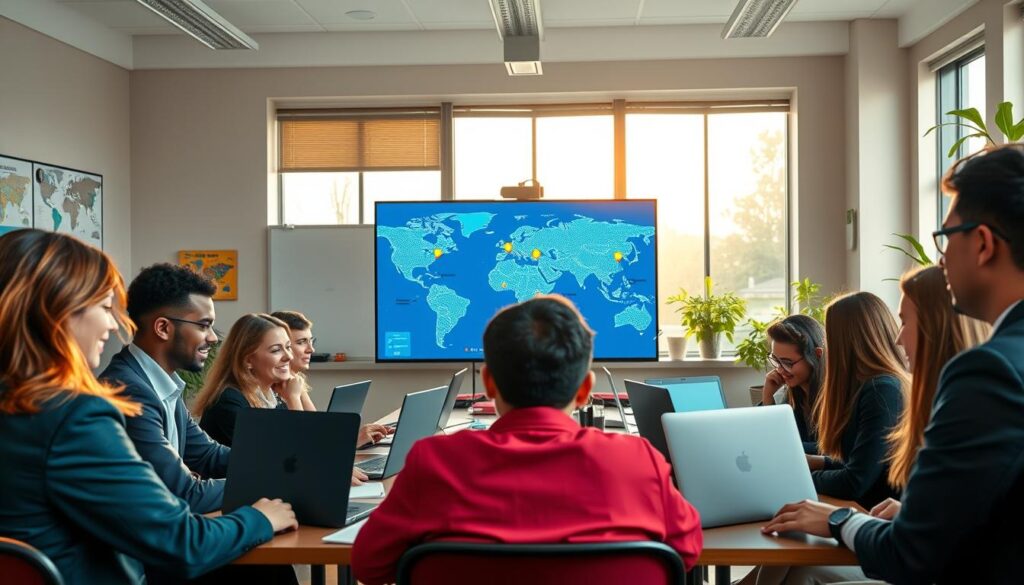
The Role of Technology in Collaboration
Technology provides the tools instructors need to build active collaboration. Rather than only consuming content, a student spends time co-constructing knowledge with peers.
- Teams use shared platforms to manage a project across time zones.
- Constructive communication helps people navigate cultural challenges.
- These programs create meaningful opportunities and lasting cross-border experiences.
How to Find and Enroll in Beginner Digital Exchange Courses
Many universities list virtual exchange options right in the regular class catalog. Students can often register for these classes the same way they do other classes.
At UT Austin, for example, Global Virtual Exchange courses require no extra application or fees. HDO 350, “Identities in Organizations,” pairs with the University of Turku. Brown’s IAPA1404 linked students with peers at Azim Premji University.
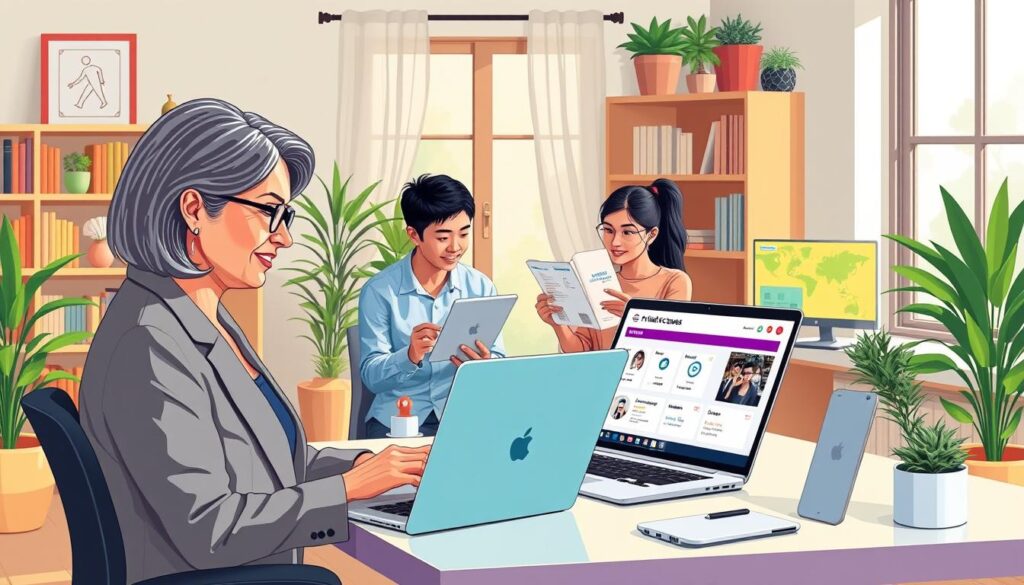
Before you enroll, confirm any course requirements with the instructor. That step ensures the program fits your degree and timeline.
- Check the syllabus for technology tools and collaboration expectations.
- Confirm credit transfer rules with your advisor.
- Look for programs that prioritize real group projects and faculty partnership across countries.
Participating students gain practical skills, new perspectives, and direct insights into global topics like economic development. For more information on partnered virtual exchange programs, see virtual exchange programs.
Maximizing Your International Learning Experience
Make virtual exchange count by focusing on concrete skills and real collaboration.
Building Intercultural Competence
Start by treating each project as a chance to learn about other cultures. Instructors design activities so every student can take part and share perspectives.
This practice helps students respect differences and grow competence that employers value.
Leveraging Digital Credentials for Your Resume
Georgia State University’s Virtual Exchange Badge gives clear proof of global skills.
Earning a badge signals to employers you can work across time and culture and that you gained real insights from group work.
Connecting with Peers Across Borders
Working with peers from around world builds project management and communication skills.
“Virtual exchange allows students to co-construct knowledge, leading to new insights that are differently posed on every side.” — Professor Geri Augusto
| Benefit | What it shows | Evidence |
|---|---|---|
| Badge credential | Verified global skills on LinkedIn | Used by students to highlight work-readiness |
| Intercultural competence | Respect for diverse perspectives | Improves teamwork across cultures |
| Peer collaboration | Project management experience | Prepares students for international work |
Conclusion
Enrolling in partnered classes opens new paths for students to build intercultural competence and career-ready skills. These virtual exchange programs offer a clear way to connect with international peers and gain hands-on experience that employers value.
Integrating a connected class into your degree expands both your academic and personal horizons. Earn badges or use course work as proof of learning and practical tools for resumes and interviews.
Explore virtual exchange opportunities at your campus. The lasting impact appears in greater confidence, global insights, and stronger readiness for international education and work.