
Can a single tool really change how clearly you speak in classroom talks and everyday conversations? This guide looks at proven methods and modern tools that help learners build confidence and muscle memory for clear speech.
Research from the University of Cambridge shows that pronunciation is one of the hardest parts of language learning. It takes confidence, repeated practice, and targeted feedback to make lasting gains.
Tools like ELSA Speak offer American English coaching and instant feedback. italki connects learners with native speakers and private tutors to target specific sounds and vocabulary.
With steady daily practice, short exercises, and real conversations, you can improve your accent, listening, and speaking skills. Read on to find the best options to fit your schedule and learning goals.
Why Pronunciation Matters for Exchange Students
Being easy to understand opens doors in class and at networking events. Clear speech helps you join discussions and show ideas without hesitation.
Confidence in Conversations
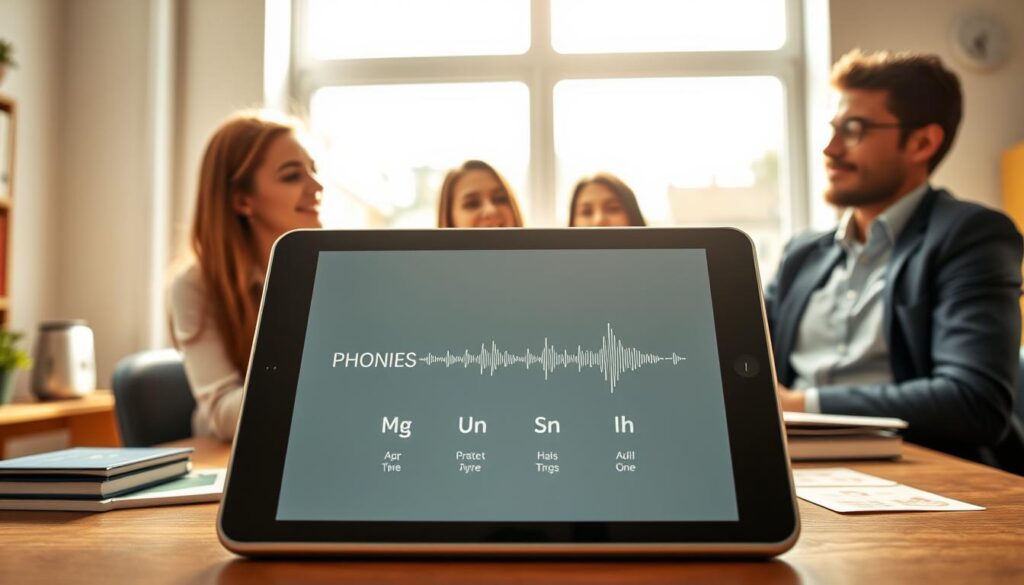
When your words are clear, you speak more often. That builds social confidence and reduces stress in group work.
Oxford University Press found clear pronunciation boosts both speaking confidence and listening comprehension. That extra clarity makes day-to-day chats smoother with native speakers.
Academic and Professional Success
Good clarity helps in class presentations and job interviews. Cambridge research shows examiners understand clearer speech more easily, which can affect grades and assessment outcomes.
- Clear pronunciation is about being understood, not perfection.
- Consistent practice speeds progress and improves key sounds and rhythm.
- Better speech lets learners take part in academic discussions and networking events.
“Mastering rhythm and melody of English pronunciation helps you feel at ease during important conversations.”
Essential Features to Look for in Pronunciation Apps
Effective digital tools show you exact changes to make in your speech and track progress. A strong tool should feel supportive and be easy to use.
Look for instant AI feedback that points out if a vowel is too short or if pitch falls early. Feedback that gives specific steps is more useful than a simple score.
Practice must mirror real conversations. Drills that place target words inside short dialogues help learners transfer skills to class and daily life.
- Phoneme-level scoring with clear tips.
- Exercises that train rhythm and intonation, not only isolated sounds.
- Options to sample different accents and learn which differences affect comprehension.
- Integrated grammar and vocabulary work that supports speaking and words in context.
| Feature | Why it matters | What to check |
|---|---|---|
| Detailed scoring | Shows precise errors in sounds and stress | Phoneme accuracy, error highlights |
| Context drills | Builds skill in natural conversations | Short dialogues, role-play tasks |
| Real-time feedback | Speeds correction and learning | AI tips, visual pitch and waveform |

“Actionable feedback and context-driven practice make the biggest gains in clear speech.”
Top Pronunciation Apps for Exchange Students
A mix of AI scoring, human coaching, and real-world audio can speed spoken progress much faster than solo drills.
Choose tools that match your routine and goals. Some platforms use AI to give instant tips inside real dialogues. Others pair that tech with human tutors who review recordings. And some immerse you in native content like songs and clips to teach rhythm and listening.
AI-Powered Platforms
Hello Nabu is a free, AI-driven platform that teaches pronunciation inside practical scenarios. ELSA Speak offers technical, phoneme-level feedback and focuses on American English.
Human-Centric Coaching
Speechling blends automated scoring with real coach feedback. Learners send recordings and get targeted notes that speed recovery of problem sounds and improve speech flow.
Immersive Audio Tools
FluentU uses authentic videos and music to train listening and vocabulary while practicing real conversations. Pronunroid uses the IPA chart, games, and quizzes to drill sounds and build accuracy.
- Hello Nabu gives AI feedback inside stories and dialogues.
- ELSA Speak targets phoneme precision and accent detail.
- Speechling adds human coaches to automated tools.
- FluentU and Pronunroid boost listening and game-based practice.
“Use a mix of tools to track progress and get the precise feedback needed to speak English more clearly.”
Leveraging AI for Real-Time Speech Feedback
Modern voice AI can spot timing and stress errors that even trained teachers miss. This tech finds subtle pauses, swapped sounds, and odd rhythm in live speech.
Instant feedback speeds learning by letting learners correct errors on the spot. When you use a pronunciation apps tool that gives live notes, you can hear and fix a “th”→”z” substitution immediately.
The MIT Technology Review notes that modern models detect patterns humans often overlook. That helps you improve pronunciation by highlighting misplaced stress or pauses that break natural flow.
The Sounds app now focuses on American English and shows how targeted tools evolve. AI analysis also checks intonation and rhythm so your accent sounds natural and clear to listeners.
| Benefit | What AI checks | How it helps |
|---|---|---|
| Real-time cues | Timing, stress, pauses | Fix mistakes immediately during practice |
| Sound detection | Substitutions like “th”→”z” | Targets problematic sounds and builds accuracy |
| Rhythm and intonation | Pitch and stress patterns | Makes speech easier to understand |
“Consistent, immediate feedback builds the confidence needed to join complex conversations.”
Using Visual Tools to Master Difficult Sounds
Seeing your own waveform makes subtle speech shifts obvious and easy to fix.
The Say It English Pronunciation app creates a visual picture of your voice. You can place your waveform next to a native speaker and spot timing and stress differences quickly.
Many learners find plain playback unclear. Visual feedback shows how each peak and pause maps to syllables and words. You can slow long words to study each segment and rehearse correct tongue and jaw moves.
Use these visuals as a daily practice tool. They make abstract phonetics concrete and speed up progress on specific sounds and overall accent.
“Seeing speech on-screen gives immediate cues that help correct persistent errors.”
The Role of Human Coaching in Language Learning
Live tutors catch subtle tone and cultural cues that automated scoring often misses. Human coaching adds emotional support and context to technical drills.
Speechling is a clear example: coaches review recordings and send personal corrections. That targeted feedback helps learners fix odd sounds and adjust rhythm.
Many successful learners use a pronunciation app for daily practice and then meet with tutors to deepen progress. Coaches point out issues like emotional tone, phrasing, and natural stress.
- Human tutors give tailored tips that AI may skip.
- Work with native speakers to learn real-world usage and cultural nuance.
- Blend short drills from an app with weekly coaching sessions for best results.
“Personal correction and encouragement turn technical accuracy into confident speaking.”
Contextual Learning Through Authentic Media
Authentic media puts words into scenes you might actually use, which boosts memory and natural rhythm.
Learning Through Stories
Short stories, film clips, and songs show how vocabulary and grammar work in real speech.
Practicing pronunciation inside a story helps your speech follow natural melody and timing.
Use a mix of brief scenes and targeted drills so new words stick and feel meaningful.
Real-World Dialogue Practice
Role-play short café exchanges, greetings, and requests. These exercises teach useful words and everyday sounds.
Record your audio and compare it to native speakers. Listening and self-feedback reveal small timing issues.
| Activity | What it trains | How to use it |
|---|---|---|
| Film clips | Rhythm, intonation | Repeat lines, mimic stress |
| Song lines | Melody, connected speech | Sing along and slow key phrases |
| Dialogue drills | Practical wording, social tone | Role-play then record and review |
Tip: Choose media that match your level and mix in short drills. This keeps learning practical and fun while you track progress over time.
Daily Habits for Consistent Speaking Progress
Small, regular speaking habits beat occasional long study sessions when you want steady gains.
Start with 5 to 10 minutes of focused practice each day. Short bursts build muscle memory and boost confidence over time.
Record one sentence daily and compare it week to week. This simple habit highlights subtle shifts in sounds and clarity.
Try shadowing native speakers by repeating lines immediately after you hear them. That trains rhythm, stress, and natural melody.
Use a reliable pronunciation app such as ELSA Speak to get instant feedback that catches habits your ear may miss.
Practice inside short stories or real-world scenarios so your work sticks to useful words and grammar. Focus sessions on specific vocabulary, tight exercises, and one accent feature at a time.
“Daily, tiny steps lead to steady progress — track them and adjust with targeted feedback.”
Overcoming Common Challenges with Accent Reduction
Accent work often feels technical, but the real goal is to speak clearly and stay true to yourself.
Deciding what to change is a personal choice. Some people aim for clarity, not to sound like a native speaker.
Balancing Clarity with Personal Identity
Work on sounds that routinely cause miscommunication. If people often ask you to repeat a phrase, targeted practice helps.
Use a reliable pronunciation app to find exact substitutions and get clear feedback. Tools like ELSA Speak can show which words break understanding.
- Accent reduction is optional. Aim for comfort and clarity.
- Focus on rhythm and intonation to be more understood than to erase identity.
- Mix short daily practice with coach input or recordings from native speakers.
“Small adjustments in timing and stress often improve comprehension far more than changing every sound.”
Conclusion
Small, targeted steps often lead to the biggest improvements in how you speak.
Choosing the right pronunciation apps and routines is the first step toward clearer English. Mix instant feedback with occasional human coaching to fix tricky sounds and refine your accent.
Keep daily pronunciation practice short and focused. That steady work helps learners improve pronunciation, raise their score in real tasks, and feel more comfortable in classroom and professional settings.
Start today: pick one tool that gives useful feedback and use it in short, real-life drills. With regular effort and the right support, your confidence and clarity will grow each week.